
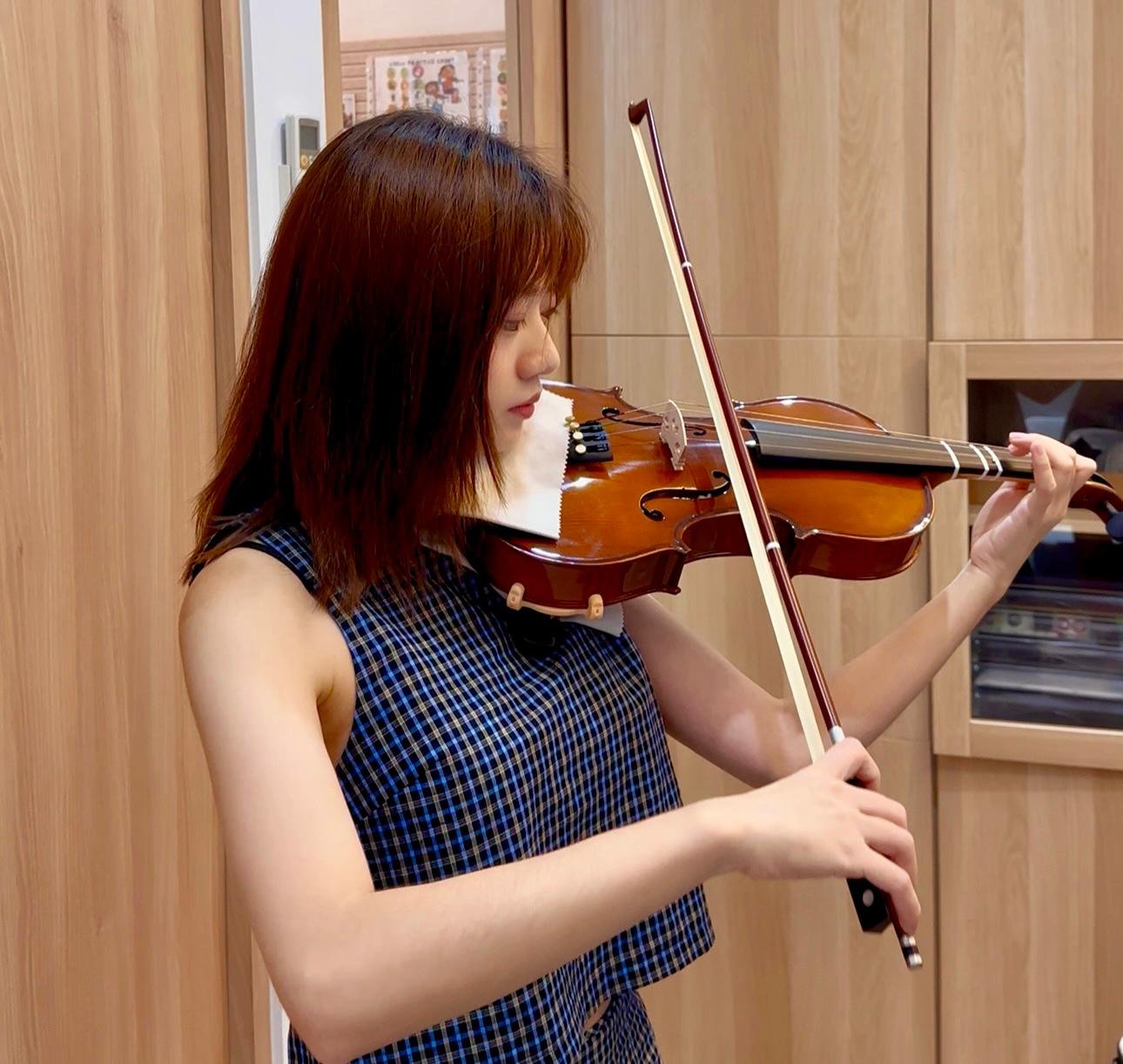
The parent's job is to protect the time and the mood, not to correct the playing. Set the same slot each day, keep it short, and let the teacher own the technical feedback. Adults teaching themselves the same discipline should apply the identical rule to their own practice: a fixed slot, a small goal, and no judging the whole week by one bad session.
Short and daily beats long and occasional
Five to fifteen minutes a day does more for a young beginner than an hour on Sunday, because string playing is a physical habit and habits need frequency. For older children and adults, twenty to thirty focused minutes is usually enough to move a specific passage forward.
Attach the session to something that already happens every day, such as before dinner or straight after homework. A slot that has to be negotiated each evening tends to disappear.
What a useful practice session actually contains
- Warm up on open strings. A minute of straight, even bowing settles the hand before anything difficult.
- One specific problem. Two bars, one shift, one awkward bow change. Not the whole piece from the top.
- Slow repetition. Play it slowly enough to get it right, then repeat it correctly several times before speeding up.
- One run through for pleasure. End with something they can already play, so the session finishes well.
Playing a piece from beginning to end repeatedly feels productive and rarely fixes anything. The mistake simply gets rehearsed along with everything else.
What parents should and should not do
Do sit nearby for young children, keep the case and music somewhere accessible, write down what the teacher asked for, and notice specific improvements out loud. A comment like "that shift was clean that time" is worth more than general praise.
Do not correct intonation, posture or bow hold yourself unless the teacher has shown you exactly what to watch for. Conflicting instructions confuse a beginner, and it turns practice into an argument. If something looks wrong, note it and send it to the teacher.
When motivation drops
Every learner has flat months. The usual causes are a piece that is too hard, a piece that is too easy, or a stretch with no visible goal. All three are solvable, and all three are worth raising with the teacher rather than waiting out.
Goals help. At Bowed Strings that can be a graded examination, a studio performance or a complimentary in-house ensemble or chamber session with other students. Playing with other people is often what brings a stalled learner back.
For adult learners practising alone
Adults usually lose momentum to schedule, not ability. Protect a smaller slot you can actually keep, track what you worked on rather than how long you played, and accept that a missed week is a missed week rather than the end of the project. If the isolation is the problem, a small class can fix it: the adult group programme runs in short packages of four or eight lessons with two to four adults.
Where the teacher fits
Lessons set the target for the week; home practice is where it is banked. If practice is consistently going badly, that is information for the teacher, not a reason to hide it. See private violin and cello lessons for lesson lengths, or message the studio with what is going wrong at home.
How much should a young beginner practise?
Five to fifteen minutes a day depending on age, at the same time each day. Frequency matters more than length for a beginner.
Should a parent correct mistakes during practice?
No, unless the teacher has shown you exactly what to look for. Protect the routine and report what you noticed instead.
What helps when a student loses interest?
Usually a change of repertoire or a concrete goal. Bowed Strings students take part in studio performances and complimentary in-house ensemble and chamber sessions through the year.
Book your first lesson
Beginners get a free booklet, and you can borrow an instrument rather than buying one first.