
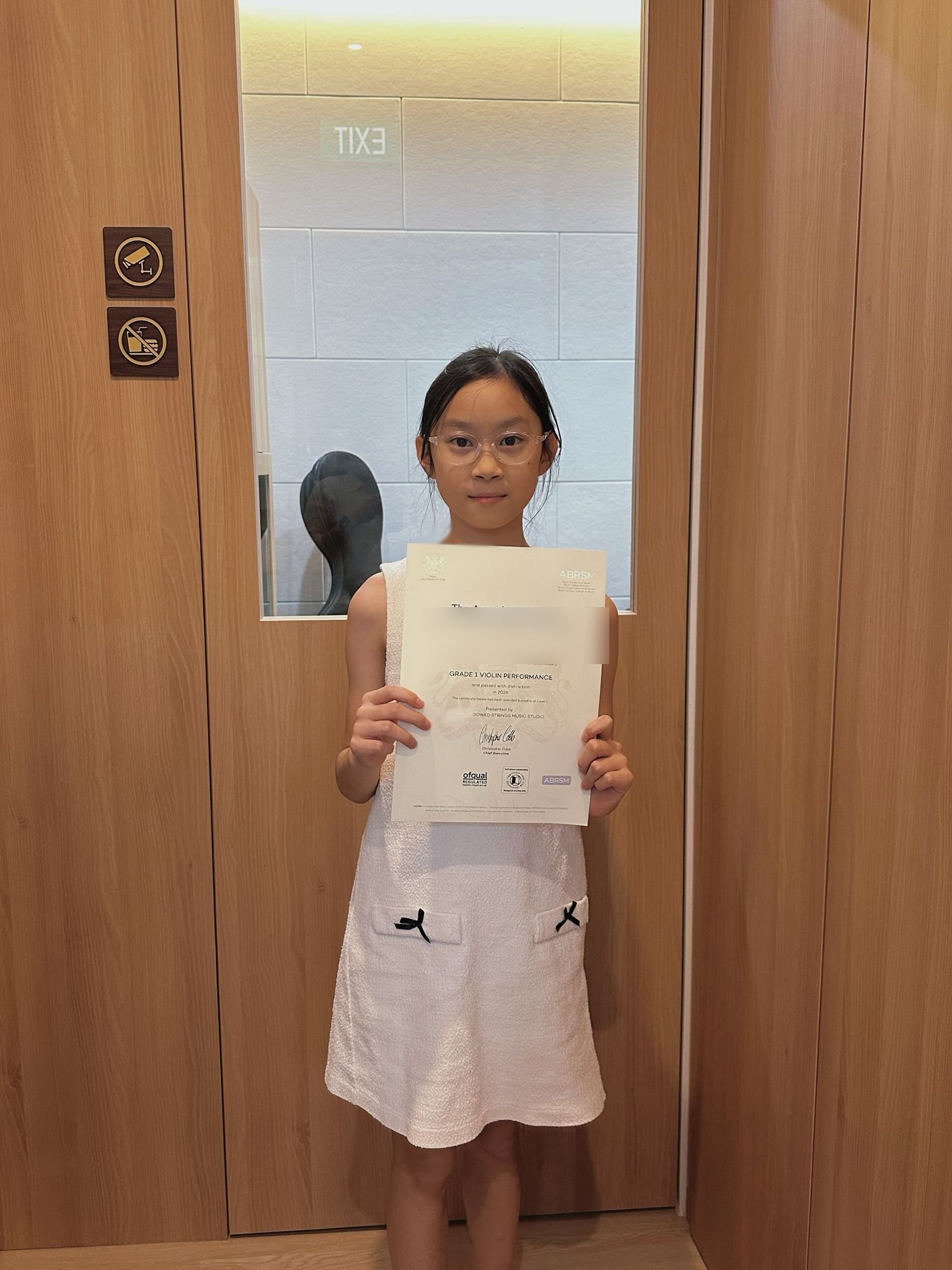
At Bowed Strings, ABRSM preparation happens inside regular lessons rather than as a separate course. Pieces, scales and arpeggios, sight-reading and aural are built from the start, and lessons shift towards the full syllabus as the exam date approaches. Theory is covered inside the lesson, with no separate theory lessons.
What a graded exam actually assesses
ABRSM offers different exam formats. Practical Grades assess prepared pieces alongside scales and arpeggios, sight-reading and aural tests. Performance Grades assess a programme of four pieces. Confirm the chosen format and current syllabus with the teacher before preparing. See the ABRSM bowed strings requirements.
How long preparation takes
As a general guide, a complete beginner may take around nine months to two years to prepare for ABRSM Grade 1, depending on age, learning pace and consistency of practice. The teacher will discuss a suitable grade and timeframe, prioritising foundations and musical understanding so each student goes in confident. Students may skip grades where that is appropriate.
ABRSM registration fees are separate from Bowed Strings lesson fees. Bowed Strings helps students with the exam registration.
Exams are a milestone, not the point
Grades give a year of work a clear shape and an external standard. They are optional. Plenty of students, particularly adults, learn without ever entering one, and the lesson content for a leisure learner is not a lesser version of the syllabus.
From 2024 to 2026, 90% of Bowed Strings students achieved High Merit to Distinction in their ABRSM graded examinations.
Why performing is the harder half
Playing well alone and playing well while nervous are different skills, and only the second one is tested on the day. Nerves shorten the bow, speed up the pulse and make the hands grip. The fix is exposure in steps rather than one high-stakes performance.
- Play for the teacher straight through, without stopping to fix anything.
- Play for one other student, then for a small group.
- Play in an ensemble or chamber session, where keeping going matters more than perfection.
- Play at a studio performance, then at an annual concert or invited stage.
Bowed Strings runs studio and group sessions through the year for performance exposure, and the in-house ensemble and chamber sessions are complimentary. The point of that ladder is that by the time a student reaches an examination room or a stage, performing is familiar rather than exceptional.
Recovering from a mistake
Examiners and audiences both respond to continuity. A student who plays a wrong note and carries on loses far less than one who stops and restarts. That is rehearsed deliberately: run the piece without stopping, whatever happens, so the instinct to keep playing is already trained.
Getting started on an exam pathway
Exam coaching is not a separate product here. It sits inside private violin and cello lessons, with the programme tailored to the student's ability, motivation and goals. See exams and performance experiences for how it is structured, or the fee page for lesson rates.
Does exam preparation cost extra at Bowed Strings?
No. Exam preparation happens inside regular lessons. ABRSM registration fees are paid to the exam board separately, and the studio helps with registration.
How long does it take to reach ABRSM Grade 1?
As a general guide, around nine months to two years for a complete beginner, depending on age, learning pace and consistency of practice.
Do students have to take graded exams?
No. Grades are optional. Many students, especially adults, learn for enjoyment and still work through the same technical foundations.
Book your first lesson
Beginners get a free booklet, and you can borrow an instrument rather than buying one first.