
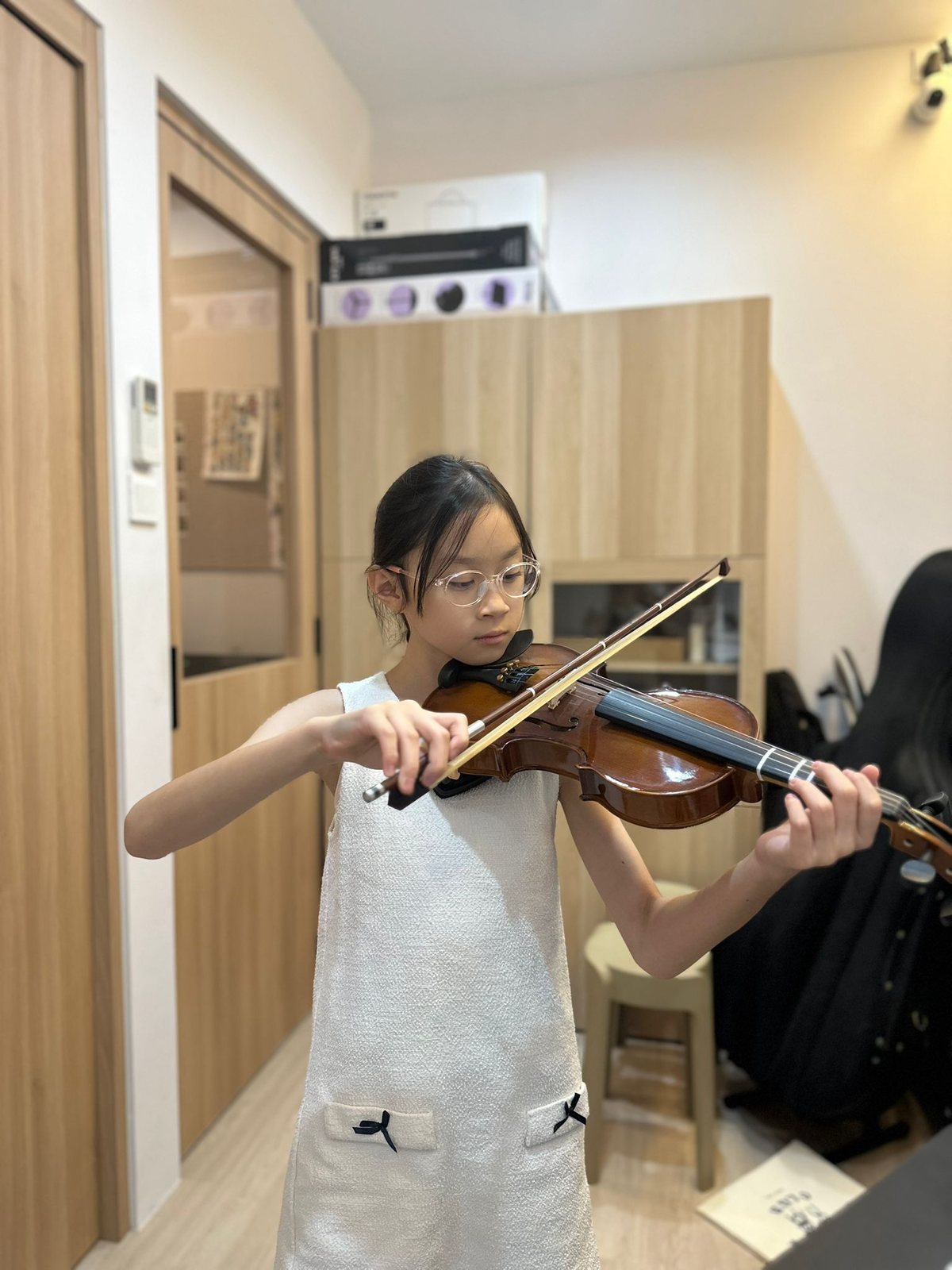
Bowed Strings teaches violin from age four and cello from age six, because the cello needs more physical reach. Age is only the first filter. Readiness is really about whether a child can hold attention for the lesson length, follow a short instruction and repeat a small task at home between lessons.
Why the two instruments start at different ages
A violin sizes down a long way, so a four year old can be fitted with an instrument that suits their arm. The cello is played seated, with the left arm reaching along a longer fingerboard, and the endpin, chair height and instrument size all have to work together. Six is the practical floor for cello here rather than four.
The readiness signs that matter more than the birthday
- Attention. Can the child stay with one activity for about twenty minutes with an adult guiding them?
- Following instruction. Can they copy a physical position when shown, and accept a correction without it ending the lesson?
- Tolerance for repetition. Early string playing is repetitive by design. A child who enjoys getting something right twice progresses faster than one who only wants new material.
- Support at home. A short daily practice habit needs an adult to set it up for the first year or two. At this stage that matters more than talent.
A child who is not ready this term is often ready two or three terms later. Starting early and stopping early is worse than starting later and continuing.
Starting later is not a disadvantage
Children who begin at eight, ten or in their teens often learn faster per lesson, because they read more fluently, understand explanations quickly and can manage their own practice. The case for starting young is a longer runway, not a better result per year.
How children and adults differ
Children absorb physical habits easily and need more repetition and more encouragement to keep going. Adults understand the explanation immediately, but have less practice time and tend to be harder on themselves. The pacing changes, not the order: posture, bow hold, left-hand placement, rhythm and reading come first for both.
Adults deciding how to start can compare one to one teaching with the adult beginner group programme, which runs as a four lesson Level 1 at S$260 for two to four adults.
What the first year looks like for a child
Expect a weekly lesson of 30 or 45 minutes, a short daily practice of five to fifteen minutes depending on age, and progress measured in posture and tone before pieces. Graded examinations are optional and not a starting point. As a general guide a complete beginner may take around nine months to two years to reach ABRSM Grade 1, and the teacher will discuss a suitable grade and timeframe rather than fix a schedule in advance.
Choosing the format for a child
Bowed Strings teaches children one to one. A private lesson lets the teacher set the pace to the child, which matters most in the first two years while posture and bow hold are being formed. See private violin and cello lessons for lesson lengths, or the fee page for the full table.
What is the youngest age for violin lessons at Bowed Strings?
Violin starts from age four. Cello starts from age six, because the instrument needs more physical reach.
Is my child too old to start?
No. Children starting at eight, ten or in their teens often progress quickly because they read and self-correct more easily. Adults can start at any age.
How much practice should a young beginner do?
Short and daily beats long and occasional. Five to fifteen minutes a day, guided by an adult, is a realistic target for a young beginner.
Book your first lesson
Beginners get a free booklet, and you can borrow an instrument rather than buying one first.