
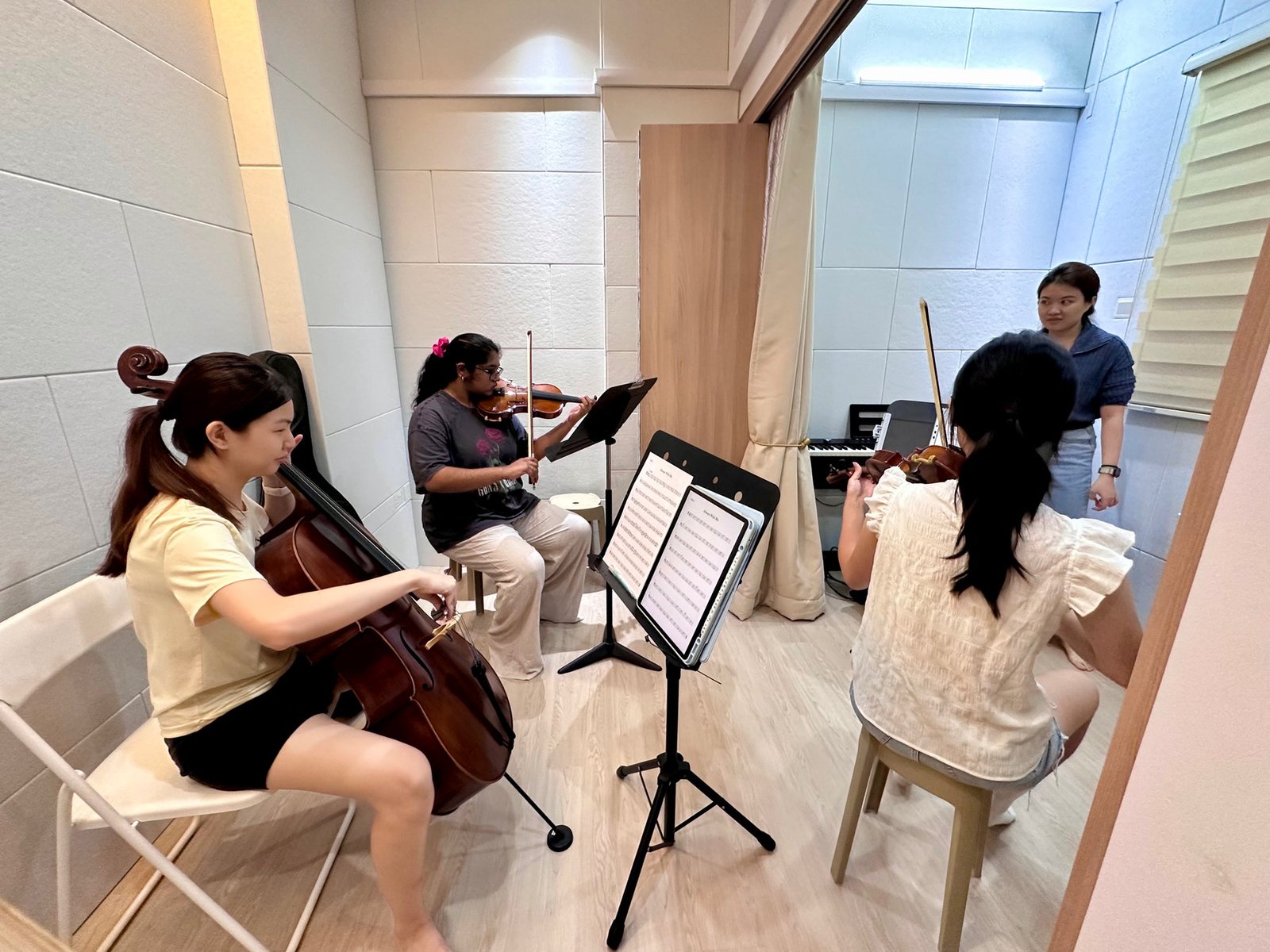
Good cello lessons develop three things together: secure technique, an expressive ear and the confidence to keep working through difficulty. Beginners start with posture, bow hold, open strings and a clear tone. As those foundations settle, they learn to read music, shape phrases and make musical choices rather than simply reproduce notes.
What a beginner learns first
The cello is played sitting down, but that does not make posture automatic. The chair height, endpin length and position of the instrument affect whether both hands can move freely. A teacher should set these up before asking for speed or difficult repertoire.
- Balanced posture. The cello should feel supported rather than squeezed between the knees.
- A natural bow hold. Early bowing work focuses on a straight path, steady contact and an even sound.
- Left-hand placement. Beginners learn reliable finger spacing and listen carefully for accurate pitch.
- Rhythm and reading. Note reading is introduced alongside playing so theory remains connected to sound.
Why progress on cello builds confidence
Cello progress is audible. A scratchy open string becomes a centred note; a difficult change becomes smooth; a short piece begins to sound intentional. These small improvements give students evidence that patient work changes the result. That is more useful than empty praise because the confidence comes from a skill they can hear and repeat.
Performance also becomes less intimidating when it is introduced in sensible steps. Playing for a teacher, then with another student, and later in a recital or ensemble lets the student practise recovering from mistakes without treating every slip as failure.
Where creativity enters the lesson
Technique gives a player choices. Once the bow can produce a stable sound, the student can explore how weight, speed and contact point change the colour of a phrase. They can compare a warm sound with a brighter one, decide where a line should grow, and explain what a piece seems to be saying.
This is why a strong lesson does not stop at correct notes. The teacher asks the student to listen, compare and make a decision. Even a beginner can shape a two-line melody with direction and character.
Children and adult beginners need different pacing
For children, readiness depends partly on physical reach and the ability to follow a short practice routine. Bowed Strings starts cello from age six. Adults do not need childhood experience before starting. Many begin because they have always liked the instrument's lower, warmer sound, and the seated position can feel more comfortable than holding a violin at the neck.
Adults often understand explanations quickly but have limited practice time. A realistic routine of short, focused sessions is more effective than an ambitious plan that disappears after two weeks.
How to choose cello lessons in Singapore
Ask who will teach you, what ages and levels they regularly handle, and whether the lesson includes technique, reading and musical interpretation. Check the actual lesson length and fee, whether an instrument is available during lessons, and what happens if you need a different format later.
At Bowed Strings Music Studio in Woodlands, private cello is taught from age six to adult by Cheong Xin Ying. Lessons begin from S$50 for 30 minutes, with 45 and 60 minute options. Students can borrow a studio cello during lessons, so a beginner does not need to buy immediately. See the cello lesson formats and current fees.
What to send before asking for a cello lesson
A useful first message is short: the learner's age, whether they have played an instrument before, the days they can attend in Woodlands, and whether they already have a cello. That is enough for the studio to recommend a lesson length and check the teacher's current openings without a long back-and-forth.
- For a child. Include their age and any previous music lessons.
- For an adult beginner. Say whether you prefer one-to-one teaching or want to compare it with the adult group programme.
- For a returning player. Include the last piece, grade or method book you worked on.
- If you do not own a cello. Say so. A studio instrument can be used during the lesson, so buying one is not a condition for starting.
What age can a child start cello lessons?
Bowed Strings starts cello from age six. Readiness also depends on the child's physical reach, attention and ability to follow a short practice routine.
Do adult beginners need musical experience?
No. Adult beginners can start with posture, bowing, reading and rhythm from the beginning. Previous piano or theory knowledge can help but is not required.
Do I need to buy a cello before the first lesson?
No. Bowed Strings has studio cellos that students can borrow during lessons. Ask about take-home arrangements before buying an instrument.
Ask about a cello lesson
Send the learner's age, experience and preferred days. You can use a studio cello during lessons, so you do not need to buy first.